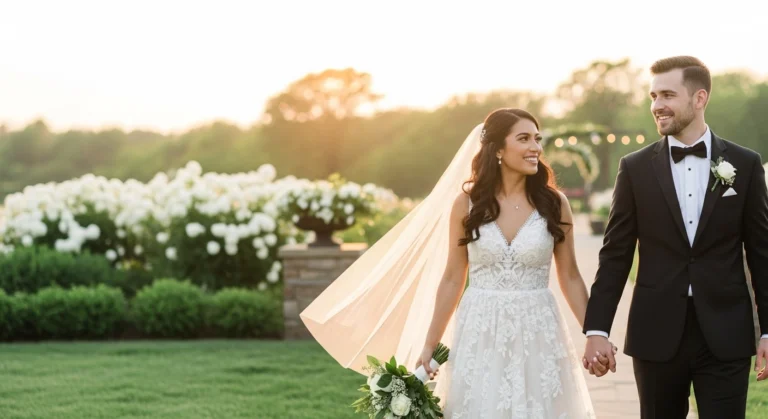
A St. Louis wedding reception timeline is not a rigid script. It is a shared playbook your DJ/MC, venue captain, caterer, and photographer use so guests feel the night unfold naturally. At Party Pros, Brian Graves and our St. Louis DJ / MC team build that playbook with you weeks ahead—then run it live with clear cues, smart buffers, and calm vendor coordination.
If you are comparing wedding entertainment options in St. Louis & Illinois, use the templates below as a starting point. We will customize names, song cues, cultural moments, and venue rules so your St. Louis DJ is never guessing at the microphone.
What a reception timeline really controls
Your written schedule answers three questions every vendor needs:
- What happens next? (the sequence)
- Who says go? (venue, planner, or DJ/MC)
- How do we recover if we run late? (buffers)
A clock alone is not enough. Party Pros also prepares MC cue notes: pronunciations, entrance order, toast order, and the one-sentence transitions that keep dead air from showing up between cake and open dancing.
For couples still choosing entertainment, our guide on how to choose the right wedding DJ pairs well with this timeline work.
St. Louis timing realities (without inventing venue partnerships)
Local flow matters more than a national “ideal” schedule:
- Same-site ceremony + reception: Guests often move rooms or outdoor-to-indoor. Build 10–20 minutes for the flip, restrooms, and cocktail overflow—especially when photos run long.
- Travel between ceremony and reception: Downtown, Central West End, West County, and Metro East traffic plus parking can eat a cocktail hour. Decide whether the couple joins cocktail hour or uses that window for portraits, and tell the St. Louis DJ which plan is real.
- Outdoor / tent evenings: Weather holds, bug spray stations, and sunset photos can slide dinner. Agree in advance what drops first if you lose 20 minutes (usually a formality, not dancing time).
- Ballrooms with hard end times: Hotels and clubs often have strict load-out. Your last dance and send-off need a reverse countdown from the venue’s end time, not wishful thinking.
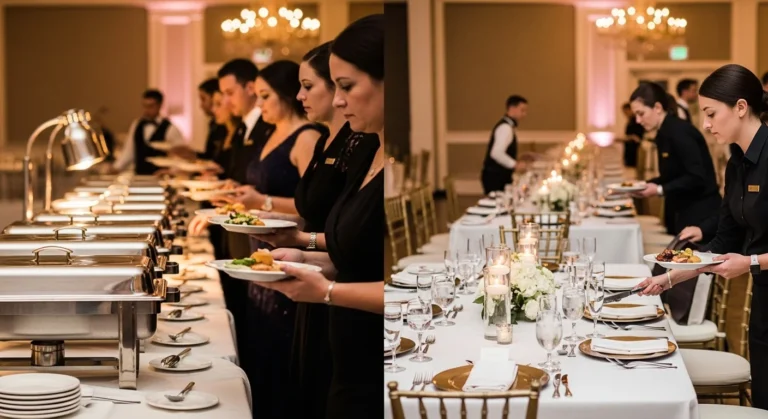
- Buffet vs plated: Service style changes when toasts and first dances feel right. See our notes on buffet vs. plated wedding dinners when you lock catering.
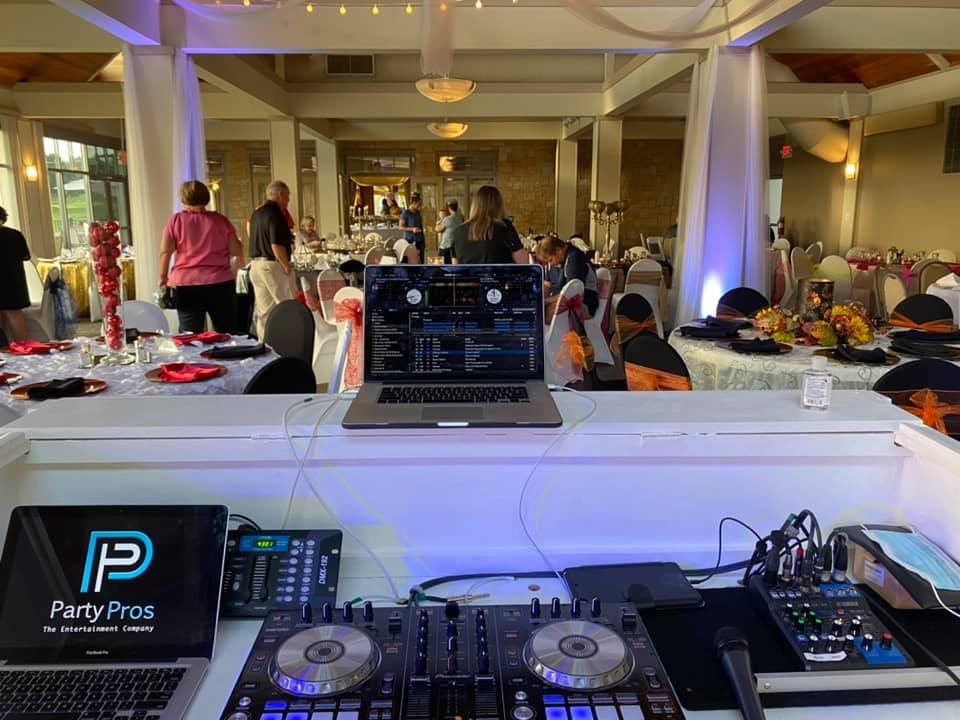
Party Pros arrives early (we plan setup well before guest arrival) so audio, lighting, and MC notes are ready before the first guest finds the bar.
Template A — Classic 5-hour seated reception (most common)
Example clock: cocktail 5:00 p.m. → end 10:00 p.m. Shift every line to match your venue block.
Cocktail hour (5:00–6:00)
Music: Conversational volume; recognizable but not dance-floor energy.
Party Pros MC cue: Soft or none. If the venue wants a “bar is open / photos still happening” note, we keep it brief and warm.
Buffers: Confirm with photographer whether the couple is present. If they are still shooting, do not announce “please welcome the newlyweds” early.
Vendor coordination: Catering opens bars/apps; DJ confirms wireless mic battery and entrance song cue points with the coordinator.
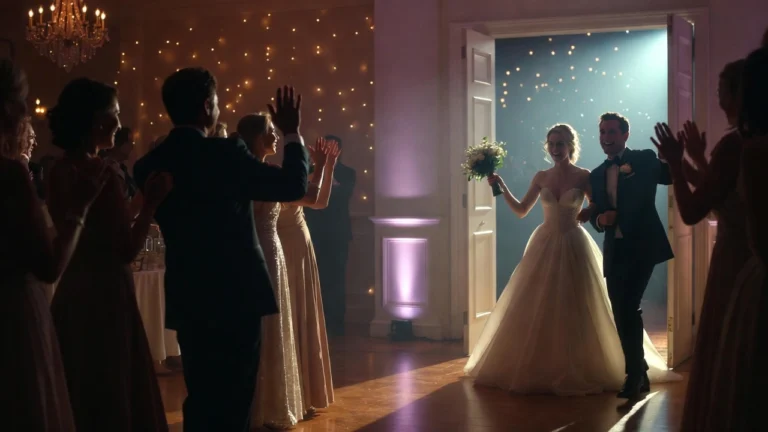
Seat guests + grand entrance (6:00–6:15)
Music: Entrance track ready at the agreed start point (not always 0:00). Browse ideas in our grand entrance song roundup, then lock your version with Party Pros.
Party Pros MC cue: Call wedding party in the exact order and pronunciation list from your planning sheet. End with the couple’s preferred titles (“Mr. and Mrs. …,” both first names, etc.). Ask guests to stand if that is your style.
Buffers: 2–3 minutes for lineup photos and a late groomsman. We do not start music until the coordinator (or designated person) gives the go.
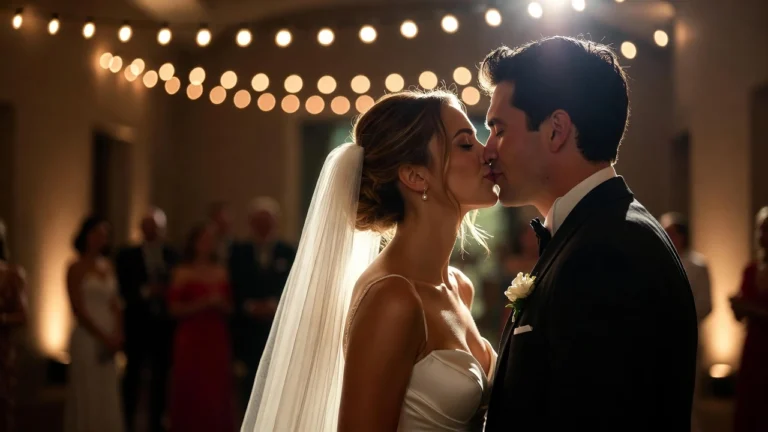
First dance (optional early) (6:15–6:20)
Some couples dance immediately after entrance while energy is high; others wait until after dinner. Either works if the photographer is in position.
MC cue: One clear intro, then mic down. We watch the couple for the natural ending—no awkward fade wars.
Welcome / blessing (6:20–6:30)
MC cue: Introduce the host or officiant by name; hand off the mic; recover it cleanly when they finish.
Vendor note: Kitchen should know whether this is before or after salad pour.
Dinner (6:30–7:30)
Music: Dinner playlist—still interesting, never competing with conversation.
MC cue: For buffets, we release tables in the order the venue prefers. For plated service, we stay quiet unless the captain asks for a timing announcement.
Buffers: If service runs long, we protect toast quality and dance-floor start more than we protect a bouquet toss.
Toasts (7:30–7:50)
Party Pros MC cue: Confirm speaker order and phonetic spellings before dinner ends. Introduce each speaker; keep the room’s attention without rushing anyone mid-story.
Timing tip: Two to three speakers at about 3–5 minutes each is the sweet spot for most St. Louis receptions. Longer programs need an earlier dinner start or a shorter cocktail hour.
Parent dances / family dances (7:50–8:05)
MC cue: Short, respectful intros. If you combine dances or use an edited track, we mark the exact out-point so the next moment does not stall.
Coordination: Photographer first; then we open the floor.
Open dancing (8:05–9:15)
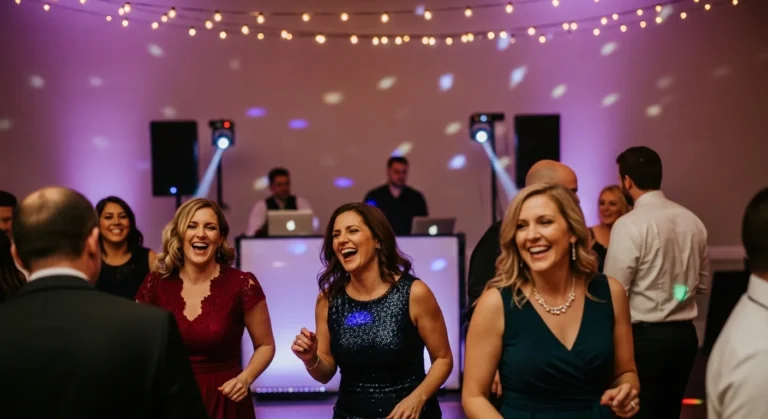
This is where a professional St. Louis wedding DJ earns the floor. We read the room—age mix, energy dips after cake, and when to take requests without derailing your must-play / do-not-play lists.
MC cue: Light touch. Announcements only when they help (photo booth open, late-night snack, special dedication).
Cake cutting (often mid-dance or end of dinner) (flexible)
Modern St. Louis couples often cut cake privately for photos or briefly mid-reception so dancing stays intact.
MC cue: If it is public, we pause the floor, invite guests’ attention, then return to music within a couple of minutes.
Vendor note: Bakery/venue needs the cake in place; photographer needs a clear lane.
Bouquet / garter or alternative (optional) (9:15–9:25)
Only if you want it. Many couples skip or replace with a group photo, anniversary dance, or charity bouquet handoff.
MC cue: Clear instructions so guests know where to stand; keep it fun, never forced.
Last call, last dance, send-off (9:45–10:00)
MC cue: Last-call timing matches venue bar rules. Final dance announced so guests who stepped out can return. Send-off instructions (sparklers, bubbles, confetti rules) are confirmed with the venue before we say them on the mic.
Buffers: 10–15 minutes from last dance to official end for hugs, coats, and load-out realities.
Template B — Condensed 4-hour reception (budget block or late ceremony)
Example: 6:30 cocktail → 10:30 end.
| Block | Clock | Party Pros focus |
|---|---|---|
| Cocktail | 6:30–7:15 | Shorter apps; couple may miss part of cocktail for portraits |
| Entrance + first dance | 7:15–7:30 | Combine energy; skip long party intros if needed |
| Dinner | 7:30–8:20 | Faster plated or efficient buffet releases |
| Toasts | 8:20–8:35 | Cap speakers early in planning |
| Parent dances → open floor | 8:35–10:15 | Protect dance time; move cake to photo-friendly micro-moment |
| Last dance / exit | 10:15–10:30 | Hard stop awareness |
MC philosophy on short nights: Fewer formalities, clearer cues, no “we’ll squeeze it in.” Guests feel rushed when the mic keeps interrupting the floor—not when the schedule is honest.
Template C — Outdoor ceremony, indoor reception (St. Louis summer / fall pattern)
- Ceremony end → cocktail: Guests migrate; we confirm whether cocktail music is patio, foyer, or ballroom.
- Weather buffer: If rain moves ceremony indoors, entrance order and song cues stay the same—only the walk path changes.
- Golden-hour photos: Build a 15-minute flex before grand entrance so the DJ St. Louis team is not holding a silent room. Soft playlist and a single “we’ll begin in a few minutes” MC note beats awkward silence.
- Temperature & energy: After humid outdoor ceremonies, open the dance floor a little earlier post-toasts; guests are ready to move.
Party Pros MC cue sheet essentials (what we collect in planning)
Bring these to your music & timeline session (part of our wedding entertainment planning process):
- Full entrance order with phonetic pronunciations
- Exact song title, artist, version, and start timestamp for each formal moment
- Toast order and any topics to avoid on the mic
- Must-play and do-not-play lists
- Who has authority to change the timeline on the day (planner, venue captain, or couple’s designate—not three people at once)
- Venue rules: sparklers, drone, quiet hours, union/staff cue preferences
- Accessibility notes (ramp entrances, quieter seating, etc.)
When those details are written once, every vendor works from the same source of truth.
How Party Pros keeps the night from unraveling
Delays happen—portraits run long, a speaker goes off-script, the kitchen needs ten more minutes. Our job as your St. Louis wedding DJ and MC is to re-sequence without announcing the problem to the room.
Typical recoveries we plan for:
- 15–20 minutes late: Shorten cocktail playlist wind-down; keep entrance order; trim optional games first.
- Dinner delayed: Hold formal dances; use light MC hospitality (“dinner will be served shortly”) only if the venue wants it.
- Toasts run long: Soften post-toast music energy, then rebuild—never punish the dance floor for a long speech.
That is the difference between a DJ who presses play and a DJ St. Louis couples trust with the in-between moments.
Explore Party Pros wedding packages and full service options (lighting, photo booth, effects) when you want entertainment and atmosphere coordinated by one team.
Soft next step
If you want a reception that feels effortless to guests and clear to every vendor, start with a timeline conversation—not a random Spotify dump. Contact Party Pros or visit our wedding entertainment page to map your St. Louis wedding reception timeline with real MC cues, buffers, and day-of execution.
Meet the people behind the mic on our team page, then let’s build your playbook.